5 Expert Tips to Relieve Neck and Shoulder Pain From Sleeping Wrong
Updated: May 20, 2026

We’ve all been there: you wake up, try to turn your head to check the alarm, and suddenly feel a sharp pain shoot through your neck or shoulder.
As Dr. Brianna Perruzza explains, “sleep is so important for recovery and overall health, but poor sleeping posture can lead to a sleep that, instead of being restorative, contributes to the stiff neck symptoms you experience in the morning.”
In many cases, neck pain after sleeping happens because you “slept on it wrong,” meaning your head, neck, or shoulders stayed in an unsupported position for too long. Since we spend about one-third of our lives sleeping (or trying to), even small alignment issues can place repeated strain on the muscles and joints in your neck over time.
Poor pillow support, an unsupportive mattress, or awkward sleeping positions can all cause your neck to rest at an unnatural angle throughout the night. Instead of fully relaxing, your muscles stay tense to protect and stabilize your spine, which can leave you waking up stiff, sore, and less rested in the morning.
Let’s explore 5 clinical tips on posture, sleep gear, and daily habits to help you relieve morning stiffness and promote better sleep.
5 Expert Tips To Relieve Neck And Shoulder Pain From Sleeping Wrong
The Checklist |
|---|
Tip #1: Adjust Your Sleeping Position
|
Tip #2: Update Your Sleep Setup
|
Tip #3: Release Daily Tension Before Sleeping
|
Tip #4: Protect Your Neck During the Day
|
Tip #5: What To Do When Your Neck Hurts
|
Tip #1: Adjust your Sleeping Position

The Goal of a “Neutral Spine”
Your sleeping position plays a major role in how your neck and back feel when you wake up. The goal is to keep your spine in a “neutral” position, where its natural curves are properly supported throughout the night.
“A neutral spine is the best posture for improved overall sleep, wellness, and reduced symptoms in the morning.” — Dr. Brianna Perruzza |
A neutral spine happens when the three anatomical curves of the spine—cervical, thoracic, and lumbar, which are the curves in your neck, upper back, and lower back—are comfortably and naturally supported. In other words, your ears, shoulders, and hips should stay relatively aligned while you’re sleeping.
When your spine is properly aligned, the attached muscles and ligaments can fully relax and recover. However, sleeping in an awkward or unsupported position can place extra strain on these structures. As Dr. Perruzza notes, “sleeping in an unnatural position throughout the night can place strain and pressure on those structures,” which may lead to stiffness or pain the next morning.
The Best Sleeping Positions For Neck Pain
1. Back Sleeping
Sleeping on your back is widely considered the best for weight distribution. It allows your head, neck, and spine to rest in a natural position. A few tips for getting better sleep on your back:
- Go for a rounded or contoured pillow to keep the natural “C-curve” of your neck.
- Steer clear of very thick pillows; they can push your chin down and strain your neck.
2. Side Sleeping
Side sleeping is the most common position, and there are tips that can help make it more comfortable and get a better sleep:
- Fill the space between your ear and the mattress (known as the “shoulder gap”) with a pillow to avoid your neck from dipping too much or your shoulder from bearing too much weight.
- Make sure your pillow’s thick enough to keep your neck aligned with the mattress.
- Consider getting a custom pillow through your healthcare provider if your standard pillow doesn’t work for you.
As Dr. Perruzza explains, “healthcare professionals are trained to size and dispense custom-made pillows for patients,” using measurements such as shoulder height, neck circumference, and neck length to determine the right pillow height and firmness for each individual. This personalized approach can improve spinal alignment and reduce neck strain during sleep.
The Trouble with Stomach Sleeping and Neck Pain
Sleeping on your stomach is the most stressful position for your neck, as “it causes your cervical spine (i.e. neck) to be rotated to the side and positioned there for hours while you sleep,” says Dr. Perruzza.
If you’re dealing with neck and shoulder pain and you usually sleep on your stomach, it might be a good idea to switch to sleeping on your back or side. Changing your sleep position can be difficult, so try implementing gradual adjustments. Remember, it is not necessary to switch overnight.
- Use a thin pillow for your head and place a body pillow under your hip to help tilt you a bit towards your side.
- Put long body pillows or rolled-up blankets on either side of you to create “barriers.”
- If you like some pressure on your chest while you sleep, give a firm pillow a hug as you adjust to side sleeping. It can give you that comforting sensation you’re used to.
“These are the exact tips I use with my clients at the clinic,” confirms Dr. Perruzza.
Tip #2: Update Your Sleep Setup
The Right Mattress
Your mattress plays a big role in how well your spine is aligned and supported at night. A mattress that’s too soft can allow your hips to sink too deeply, throwing your spine out of alignment. As Dr. Perruzza explains, this “can misalign your pelvis and strain the lumbar spine,” leading to increased discomfort and tension throughout the body.
On the other hand, a mattress that’s too firm may not provide enough pressure relief in areas like the shoulders and hips, making it uncomfortable and harder to stay asleep comfortably through the night.
Research suggests that a medium-firm mattress is often the best fit for most sleep styles because it balances comfort and support while helping maintain natural spinal alignment.
However, most mattresses lose their effectiveness over time. If you’ve had your mattress for several years, it’s important to check whether it still provides consistent support. As Dr. Perruzza explains, “a mattress that has lost its structural integrity or shows visible wear will impact the support and pressure placed on the spine during sleep.” Sagging, uneven surfaces, or worn-out materials can reduce proper alignment and contribute to discomfort throughout the night.
READ MORE: Check out our top medium-firm mattress picks
The Right Pillow
1. Pillow Loft (Height) and Support
Your pillow plays an important role in keeping your neck supported while you sleep. A pillow’s “loft” refers to its height when your head is resting on it. The goal is to keep your neck aligned in a natural, comfortable position.
However, even with a high-quality mattress, the wrong pillow height can lead to neck or upper back discomfort. Different sleep positions usually benefit from different pillow heights:
- Side sleepers often need a higher-loft pillow to fill the space between the head and mattress created by the shoulders, aka the “shoulder gap”. If the pillow is too thin and the gap isn’t filled, it can cause neck strain.
- Back sleepers, on the other hand, typically do better with a medium-to-low loft pillow, which helps support the natural curve of the neck without pushing the chin too far forward.
Dr. Brianna Perruzza notes: “The goal is to keep the neck properly supported and avoid positions that place extra strain on the muscles and joints during sleep.” |
2. Pillow Materials
The material your pillow is made of affects how well it maintains its shape throughout the night.
- Memory Foam is recommended for sleepers with chronic neck pain. They soften to contour closely to the weight and heat of your head, providing tailored support and cushioning that doesn’t shift or flatten during the night. Options like the Octave Memory Foam Pillow are also adjustable, so you can control the loft to what’s right for you.
- Feather and Down Pillows offer a classic, luxurious feel, but they can be higher maintenance, as they require frequent fluffing to maintain their shape. They can also flatten over time.
- Cervical and Contour Pillows have a dip for your head and a raised edge for your neck. They follow the natural curve of your spine, making them great for back sleepers who might otherwise wake up feeling stiff.
The Right Sleep Environment
Restorative sleep is not just about your sleeping posture; it’s also about how well you actually sleep through the night. Not getting enough deep sleep can reduce the time your body gets to repair it’s muscles and joints at night, worsening your neck and shoulder pain.
Your bedroom environment plays a big role in the quality of your sleep. If your room is too hot or too bright, you are more likely to toss and turn. As Dr. Perruzza suggests. “cooler temperatures are optimal for sleep hygiene and overall sleep health, because the drop in body temperature promotes consistent Rapid Eye Movement (REM) cycles.”
To help your muscles stay relaxed and keep you in a deep sleep, experts recommend keeping your room dark, quiet, and cool, ideally around 18°C. Minimizing nighttime tossing and turning lets your body focus on healing and naturally restoring itself.
READ MORE: Is 6 Hours of Sleep Enough?
Tip #3: Release Daily Tension Before Sleeping

Throughout the day, gravity and stress can cause muscles to tighten. This is why you should take the time to physically “decompress” before your head hits the pillow.
Here are some tips from chiropractor Dr. Perruzza to help you relieve muscle tension before bed:
- Gently stretch with light neck circles and shoulder rolls to decompress the spine.
- Practice deep breathing with intentional muscle relaxation to help regulate your nervous system. This can help lower cortisol, aka the stress hormone, in the body and aid in releasing muscle tension.
- Limit phone and screen time to reduce blue light exposure. Instead, use dim, warm lighting to support melatonin production (the hormone that signals to your body that it’s time to sleep) and physical recovery.
- Lower the room temperature to signal to your body that it’s time to power down by releasing melatonin.
Tip #4: Protect Your Neck During the Day
Neck pain is about more than what happens in your bed. Waking up with morning neck and shoulder pain may be due to the tension you’ve been building up the day before.
If you spend many hours at a time hunched over a laptop at work or looking down at a phone, you may be developing what experts call “Tech Neck.” Constantly looking down at a screen can strain your neck muscles, leading to fatigue that follows you right into bed.
An easy fix is to set your computer monitor at eye level so you can look straight ahead instead of tilting your head down.
Dr. Perruzza’s Tip : |
|---|
“Take short breaks every 30 to 45 minutes to stand up, stretch, and reset your posture.” |
Keep in mind that if your pain persists even after you’ve improved your sleep setup and daytime habits, the issue might be more than just “sleeping wrong.” Sometimes, underlying medical conditions like osteoarthritis, spinal stenosis, or a pinched nerve can be the real cause of the discomfort. A healthcare professional can help determine whether you need a specific treatment plan beyond just changing your sleeping position.
Tip #5: What To Do When Your Neck Hurts

Heat Therapy
When you wake up with neck pain, applying heat can be a simple way to relieve discomfort. As Dr. Perruzza explains, heat “helps relax strained muscle fibres,” which may reduce stiffness and tension.
A warm shower or using a heating pad for about 15 minutes can help loosen tight muscles, improve blood flow, and make it easier to move your neck comfortably.
Gentle Mobilization
While it may be tempting to stay in bed when your neck hurts, gentle movement is often better for recovery. Light activities like walking or gentle stretching can help keep your muscles loose and support healthy spinal movement. As Dr. Perruzza likes to say, “motion is lotion.”
One simple way to relieve tension at home is the “towel roll” exercise. Lie on your back with a small, rolled-up towel tucked under the natural curve of your neck. According to Dr. Perruzza, this “gives your spine some gentle support and traction while you relax”, which may help reduce stiffness and make it easier to return to your normal routine.
Conclusion: Reclaim Your Rest
To increase your chances of waking up pain-free, consistency is everything. When you adjust your sleep routine and manage your stress throughout the day, sleep becomes a time for healing and recovery rather than a cause of injury.
This article is for informational purposes only. For medical advice or diagnosis, consult a healthcare professional, especially if you experience “red flags” such as:
- Chronic tingling or numbness in the arms.
- Loss of grip strength or trouble turning your head for shoulder checks.
- Neck stiffness or pain that lasts more than 3–4 days.
- Headaches that occur along with neck tension.
- Pain waking you up in the middle of the night.
- Any other changes to your health within this time period.
We’re here to help you find the right mattress for your needs. Start by exploring our top mattress guides and resources:
- Best Mattress Guides: 5 Tips for Choosing A New Mattress, Canadian Mattress Brands
- Reviews: Douglas Original, Logan & Cove Choice, Juno, Octave Vista
- Comparisons: Bloom vs Douglas, Endy vs Juno
We test mattresses with independent engineers, scoring them on over 40 important factors like price, warranty, comfort features, motion isolation, and more. Every mattress is reviewed based on real data, making it easier to compare and choose.
About our Expert Contributor
This article was written in partnership with Dr. Brianna Perruzza, a dual-licensed Chiropractor and Manual Osteopathic Practitioner dedicated to personalized, whole-body wellness. Holding a B.Sc. in Kinesiology from the University of Western Ontario and a Doctorate from the Canadian Memorial Chiropractic College, she integrates spinal health, exercise, and nutrition to treat both acute and chronic conditions.
Driven by evidence-based practices and patient education, Dr. Perruzza empowers individuals to overcome injury and enhance their quality of life. She's currently expanding her expertise by completing a degree in Osteopathy, further bridging the gap between chiropractic and osteopathic care to provide a comprehensive, integrative approach to health.
Sources
- Harvard Health Publishing. (n.d.). Say good night to neck pain. Harvard Medical School. https://www.health.harvard.edu/pain/say-good-night-to-neck-pain
- Cleveland Clinic. (2022, December 14). Stiff neck: Causes, symptoms, treatment & when to see a doctor. https://my.clevelandclinic.org/health/symptoms/24477-stiff-neck
- South Vancouver Physio. (n.d.). Neck pain from sleeping. https://southvanphysio.com/neck-pain-from-sleeping/
- Cherney, K. (2023, April 20). Treating pain with heat and cold. Healthline. https://www.healthline.com/health/chronic-pain/treating-pain-with-heat-and-cold
- WebMD. (n.d.). Neck and shoulder pain. https://www.webmd.com/pain-management/neck-shoulder
- Transform Chiropractic. (n.d.). Neck pain after sleeping. https://transformchiropractic.com/neck-pain-after-sleeping/
- Jeon, M. Y., Jeong, H., Lee, S., Choi, W., Park, J. H., Tak, S. J., Choi, D. H., & Yim, J. (2014). Effects of cervical stretching and cranio-sacral therapy on pillows on the sleep quality and neck pain of adults. Journal of Physical Therapy Science, 26(9), 1387–1392. https://doi.org/10.1589/jpts.26.1387
- Hu, X., Gao, Y., Song, Y., Yang, X., Liu, K., Luo, B., Sun, Y., & Li, L. (2025). The effect of mattress firmness on sleep architecture and PSG characteristics. Nature and Science of Sleep, 17, 865–878. https://doi.org/10.2147/NSS.S503222
- Aminoff, M. J., Boller, F., & Swaab, D. F. (2011). Preface. Handbook of Clinical Neurology, 98, vii. https://doi.org/10.1016/B978-0-444-52006-7.00047-2
Best Sleep
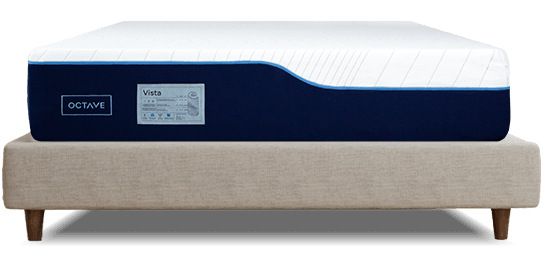
Octave Vista
- 365-night sleep trial and 15-year warranty
- Cooling features and five-zone support system
- Premium memory foam offers impressive pressure relief and motion isolation
FALL SAVINGS EVENT ON NOW! Get a FREE Premium Sleep Bundle + Duvet Set with every mattress purchase, Up to 20% OFF Bed Frames, and 15% OFF All Accessories. See website for details >
Sponsored Ad
Table of Contents


 Save
Save
Save
Save

